
Wrigley Field tickets: transfer rules, entry tips, and how to buy safely
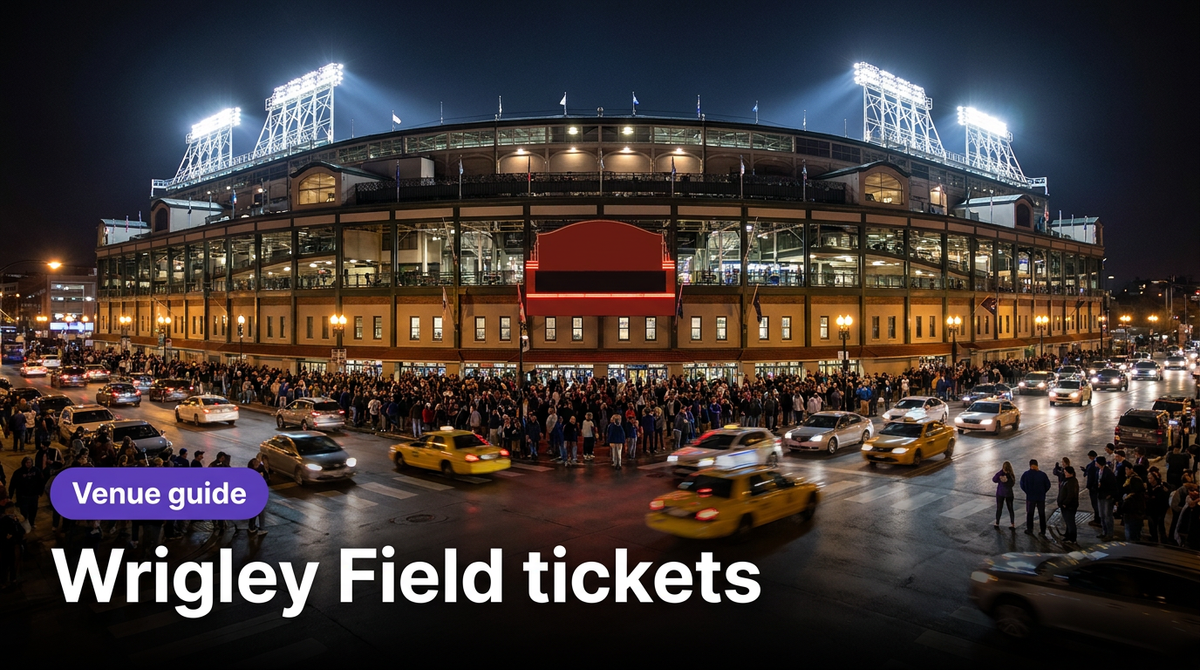
A calm, practical Wrigley Field guide: official-first buying, mobile ticket setup, bag rules, re-entry limits, transit and parking friction, and the checks that matter before you commit to resale.
Quick answer
- Start official: begin with the venue or event’s official page, then follow the official ticket link.
- Treat mobile access as important: for Cubs games, tickets are handled through the MLB Ballpark app, and screenshots are not accepted for entry.
- If it’s sold out: compare verified resale totals after fees, and confirm delivery method before you buy.
- Keep bags simple: Wrigley Field does not allow backpacks, including clear backpacks, and larger bags can create avoidable entry problems.
- Plan your arrival: transit is often easier than driving, but if you do drive, solve parking before event night.
Before you lock anything in, keep the core playbooks that matter most for this venue close by:
- ticket scams checklist
- sold out tickets playbook
- last-minute tickets guide
- ticket transfer not available
If you are comparing options more broadly, start with Chicago tickets.
Wrigley Field tickets: the calm venue guide
Wrigley Field is one of those venues where buyers make two different mistakes at once: they focus too much on getting in and not enough on what happens once they arrive.
That matters here because Wrigley creates real event-night friction. The venue has strict bag rules, a no-re-entry rule for the ballpark, heavy transit and neighborhood traffic around bigger dates, and a mobile-ticket flow that you do not want to troubleshoot at the gate. Add a sold-out Cubs game or a major summer concert, and bad buying decisions get more expensive fast.
This page is the practical checklist to reduce those mistakes.
Step 1: Buy official first
When people search for Wrigley Field tickets, they land on a mix of official pages, resale marketplaces, broker-style results, and listings that make everything look equally safe.
It is not equally safe.
Your best order is still the same:
- start on the official event page
- follow the official ticket link
- use verified resale only if the official route is no longer workable
For Cubs games, start with Chicago Cubs single-game tickets. For concerts, use the official Concerts at Wrigley Field page when your event appears there.
If a listing feels urgent, vague, or oddly informal, pause and reset with the ticket scams checklist. Wrigley is exactly the kind of venue where buyers talk themselves into a bad shortcut because the event feels special.
Step 2: Mobile tickets matter here more than many buyers expect
For Cubs games, official guidance is clear: tickets are mobile, managed through the MLB Ballpark app mobile ticketing guide, and screenshots are not accepted for entry.
That changes the risk calculation.
Before event day, make sure you can:
- sign into the correct account on your phone
- open the live ticket on your device
- add the ticket to your mobile wallet if supported
- confirm that every person in your group has a workable entry plan
For Cubs games, the team also allows in-app ticket forwarding until two hours after first pitch, as long as the ticket has not already been scanned. That is useful, but it should not make you casual about resale. Concerts and other non-baseball events can have different delivery flows, timing rules, and organizer controls.
If you are buying resale, the key question is not just whether the ticket exists. The real question is whether the ticket will reach you in a usable way, on time, in the correct account. If that part feels unclear, stop and read ticket transfer not available before paying.
Step 3: If it’s sold out, use verified resale carefully
Wrigley hosts exactly the kinds of events that make buyers overconfident: rivalry games, summer weekends, major concerts, special nights, and dates where people assume a huge venue means there will always be another option.
Sometimes there is. Sometimes there is only a worse option later.
If the official path is gone, verified resale can be a practical Plan B. But only if you check the details that affect actual entry:
- total price after fees
- delivery method
- delivery deadline
- refund or replacement terms
- whether the listing makes the entry method clear
If you are buying close to the event, combine that with the last-minute tickets guide. If the date is already marked unavailable, move through the sold out tickets playbook before you panic-buy.
Step 4: Bag rules are stricter than casual buyers expect
Wrigley is not the place for a “just bring it and see” approach.
The official Wrigley Field policies and procedures say backpacks, including clear backpacks, are not permitted. Hard-sided coolers are not permitted either. Bags larger than 16 x 16 x 8 inches are also not allowed. The venue also says it does not offer large bag or luggage storage.
That practical takeaway is simple:
- do not bring a backpack
- keep whatever you carry small and easy to inspect
- do not assume you can store a larger item nearby through the venue
- remember that medical and diaper bag exceptions are not the same as a general bag allowance
This matters even more if you are heading to Wrigley directly from work, the airport, or another part of the city. A normal day bag can turn into an entry problem fast.
There is one more nuance worth remembering: the Cubs’ security page notes that prohibited items can differ for non-baseball events. So if you are attending a concert or special event, check your specific event instructions as well, not just the standard ballpark rules.
Step 5: Re-entry, assigned gates, and what buyers get wrong
At Wrigley, buyers often assume the main risk is buying from the wrong place. That is true, but the next-biggest risk is showing up unprepared for the actual entry process.
For Cubs games, official guidance says each mobile ticket includes an assigned entry gate to help manage entry and exit flow. The venue also says guests may not exit and re-enter the ballpark once their ticket has been scanned, with a limited Gallagher Way exception during games.
That means the “we’ll just run back out if we need to” mindset is a bad plan here.
Before you get in line, make sure:
- the right person has the right ticket on the right phone
- your phone is charged
- your bag actually fits policy
- your group knows which gate to use if that information appears on the ticket
- you have already handled anything you would otherwise need to go back outside for
This is one of those venues where a five-minute prep check is better than a twenty-minute line problem.
Step 6: Parking, transit, and neighborhood friction
Wrigley sits in a dense neighborhood, and that changes the experience.
The Cubs strongly encourage public transportation, and that is usually the calmest choice for many buyers. The CTA Wrigley Field transit guide notes that the Addison Red Line stop is about a half block from the ballpark, and bus routes like #8 Halsted, #22 Clark, and #152 Addison also serve the area.
If you are driving, do not improvise.
The official Wrigley Field parking and transportation pages make clear that parking should be treated as part of the plan, not an afterthought. Official parking is cashless, advance reservations are available, and for some Cubs night and weekend games the team offers a free remote parking lot with shuttle service.
The practical rule is this:
- if you are comfortable with transit, use it
- if you are driving, reserve parking before event night
- if you are using rideshare, give yourself more time than you think you need
Wrigley punishes late logistical decisions more than buyers expect.
Step 7: Presales and timing
Wrigley events can produce two different buyer traps.
The first is thinking presale access guarantees a ticket.
The second is thinking you can always wait because the venue is large.
Neither is reliably true.
If you are trying to get in early, use ticket presales explained before the next onsale. If you miss the first drop, do not jump straight to risky resale. Re-check the official path first, then move through the sold-out logic in order.
Step 8: If plans change
For Cubs tickets, the official policy says there are no refunds or exchanges, and all tickets are subject to the team’s terms and conditions. Other Wrigley events can follow different organizer rules.
That is why refunds should be treated as a before-you-buy question, not an after-you-regret-it question.
If flexibility matters to you, read event ticket refunds before you commit.
Day-of checklist for Wrigley Field
Use this quick checklist before you leave:
- open your ticket before traveling
- make sure the correct app/account works on your phone
- charge your phone or bring a battery pack
- do not bring a backpack
- check your event-specific gate and policy notes
- decide transit, parking, or rideshare in advance
- give yourself time for neighborhood congestion and security lines
Related guides
Final word
Wrigley Field is safest when you keep the process disciplined: official first, verified resale only when necessary, mobile access confirmed before travel, bag rules handled in advance, and transportation solved before the line starts moving.
The biggest mistakes here are rarely dramatic. They are usually small assumptions that stack together: the wrong bag, the wrong account, the wrong arrival plan, the wrong resale shortcut.
Avoid those, and Wrigley gets much easier.
Next step: if your event is already tight or sold out, start with the sold out tickets playbook and keep the last-minute tickets guide open as your backup plan.